
Bridge Piercing in Nairobi, Kenya
A Bridge Piercing — also known as an Erl Piercing — is a surface piercing located on the bridge of the nose, between the eyes. It’s a bold and unique facial piercing that gives off a futuristic or alternative aesthetic, depending on jewelry choice and facial structure.
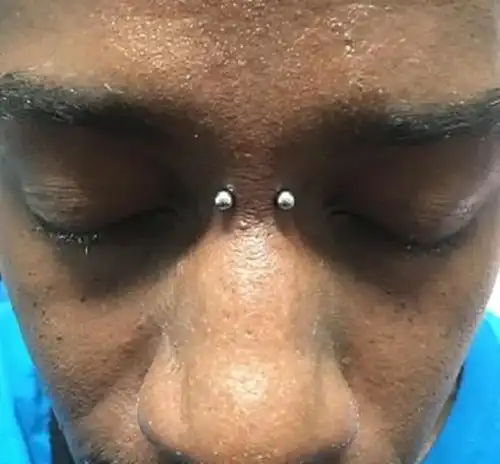
Bridge Piercing
Key Features of a Bridge Piercing
- Unique Placement: Located horizontally across the bridge of the nose, between the eyes — creating a striking and symmetrical facial accent.
- Surface Piercing Type: Unlike nose or septum piercings, it only goes through skin and tissue, not cartilage or bone.
- Jewelry Style: Typically uses a straight barbell made of titanium, surgical steel, or bioplast to minimize irritation and rejection.
- Moderate Pain Level: Usually rated 4–6 out of 10; the procedure is quick but may cause brief pressure or watering of the eyes.
- Healing Time: Takes around 8–12 weeks to heal fully, though surface piercings may require longer or extra care.
- Aftercare Routine: Clean with saline solution twice daily, avoid touching, and keep cosmetics, sweat, or tight eyewear away from the area.
- Jewelry Customization: Once healed, you can use gemstone barbells, flat ends, or decorative beads to suit your style — from minimalist to bold looks.
- Facial Aesthetic Impact: Adds a modern, edgy, or avant-garde touch to facial symmetry; pairs well with eyebrow or septum piercings.
Bridge Piercing Procedure (Erl Piercing)
-
Consultation & Assessment
– Our piercer begins by examining your facial structure to ensure your anatomy is suitable for a bridge piercing.
– You’ll discuss placement options, jewelry types (usually a straight barbell), and healing expectations.
– Our piercer will also review health and safety guidelines, allergies, and any previous piercing history. -
Preparation & Sterilization
– Our piercer washes and sanitizes their hands and wears new sterile gloves.
– All equipment and jewelry are sterilized using an autoclave to prevent infection.
– The bridge area of your nose is cleaned thoroughly using an antiseptic solution. -
Marking the Placement
– Our piercer uses a surgical marking pen to mark the exact entry and exit points of the piercing.
– You’ll be given a mirror to confirm the placement and ensure it’s symmetrical with your facial features.
– Proper alignment is crucial for both aesthetic balance and comfort once healed. -
Piercing Process
– Using a sterile hollow needle, our piercer makes a quick, precise horizontal puncture through the skin on the bridge of your nose.
– The needle and jewelry (typically a 14G or 16G straight barbell) are inserted immediately to minimize tissue trauma.
– The entire process lasts just a few seconds — you may feel pressure or slight watering of the eyes, but it’s generally tolerable. -
Jewelry Insertion & Adjustment
– The jewelry is gently inserted and secured with threaded or push-fit ends.
– Our piercer checks for proper fit and alignment, ensuring there’s enough space for initial swelling during healing. -
Aftercare Instructions
– You’ll receive a detailed aftercare guide, typically including:
→ Clean the area twice daily with saline or piercing aftercare spray.
→ Avoid touching or rotating the jewelry.
→ Do not apply makeup or creams around the area.
→ Sleep on your back to avoid irritation.
→ Avoid glasses or sunglasses that rest on the bridge until healed. -
Healing Check-Ups
– A follow-up appointment is recommended after 4–6 weeks to assess healing and jewelry fit.
– Once fully healed (usually in 8–12 weeks), you may change the jewelry to your desired style.
Considerations Before Getting a Bridge Piercing
A Bridge Piercing is an eye-catching and stylish surface piercing that sits between your eyes across the bridge of your nose. While it looks bold and unique, it’s important to understand the practical, anatomical, and aesthetic factors before deciding to get one.
-
Facial Anatomy & Suitability
– Not everyone’s nose bridge anatomy is suitable for this piercing.
– Our piercer will check if there’s enough flat skin and tissue on the bridge for safe placement.
– If your nose bridge is too curved or thin, the piercing might migrate or reject faster. -
Migration & Rejection Risk
– Bridge piercings are surface piercings, meaning they sit shallow under the skin.
– Because of this, your body may push the jewelry out over time.
– Choosing a professional piercer, correct jewelry size, and proper aftercare helps minimize this risk. -
Scarring Potential
– If your body rejects the piercing or you remove it prematurely, small scars or marks may remain.
– Discuss scar risks with your piercer — they can recommend jewelry and placement to reduce this possibility. -
Healing Process Commitment
– Healing typically takes 8–12 weeks, but may vary based on your lifestyle and aftercare.
– During healing, you must clean the area twice daily, avoid touching, and limit pressure from glasses or helmets.
– Bridge piercings need consistent hygiene to avoid irritation and infection. -
Lifestyle & Accessories
– If you wear glasses or sunglasses, ensure they don’t rest on the piercing.
– Consider whether your job, school, or environment is piercing-friendly — you may need to cover or remove it temporarily in certain settings. -
Jewelry Material & Size
– Always start with implant-grade titanium or surgical steel jewelry, as they are hypoallergenic and reduce the risk of infection.
– The initial barbell should be slightly longer to allow room for swelling, and can later be replaced with a snug fit once healed. -
Cost & Aftercare Investment
– In Kenya, the average cost ranges from Ksh 3,000 – Ksh 6,000, depending on the studio and jewelry material.
– Factor in aftercare products like saline solution and potential follow-up visits for check-ups. -
Professional Piercer Selection
– Always choose an experienced piercer working in a sterile environment.
– Avoid DIY or unlicensed setups — surface piercings require precision and expertise to prevent complications. -
Personal Style & Confidence
– The bridge piercing is visually prominent — it changes your facial balance and draws attention to your eyes.
– Be sure it aligns with your personal aesthetic, and that you’re ready for the commitment to care and maintenance.
Pain and Healing for a Bridge Piercing
A Bridge Piercing is one of the most unique facial piercings — sitting horizontally across the bridge of the nose between your eyes. While it looks bold and modern, it’s natural to wonder how much it hurts and what the healing journey is like.
Pain Level: What to Expect
- The pain level for a bridge piercing is usually rated 4–6 out of 10.
- The sensation is often described as a sharp pressure or quick pinch — more discomfort than actual pain.
- Since the piercing only goes through skin and tissue (not cartilage or bone), the procedure is brief and relatively mild.
- It’s common for your eyes to water during the process due to nerve proximity — this is completely normal and temporary.
Immediately After Piercing
- The area might feel slightly sore or tight for the first few days.
- Mild redness, swelling, or warmth around the site is normal in the first 48–72 hours.
- You may also feel a little pressure when moving your facial muscles — this should ease as the tissue adjusts.
Healing Timeframe
Healing Stage | Duration | What Happens |
Initial Healing | 1–3 weeks | Swelling subsides, redness decreases, and the tissue starts closing around the jewelry. |
Intermediate Healing | 4–8 weeks | Skin strengthens, and tenderness fades. Continue consistent cleaning and avoid pressure. |
Full Healing | 8–12 weeks | The piercing is stable, minimal sensitivity remains, and you can switch to fitted jewelry. |
Healing time varies based on skin type, aftercare consistency, and lifestyle habits.
Aftercare During Healing
- Clean with saline solution or sterile piercing aftercare spray twice daily.
- Avoid touching or rotating the jewelry unnecessarily.
- Keep makeup, skincare, or sunscreen away from the area until healed.
- Avoid sleeping on your stomach or pressing your face into pillows.
- Don’t wear glasses or shades that rest on the bridge during healing.
- Stick to titanium or surgical steel jewelry to minimize irritation or allergic reactions.
Healing Complications to Watch For
- Persistent swelling, redness, or discharge beyond 1 week may signal irritation or infection.
- Migration or rejection can occur if the body pushes the jewelry outward — seek professional advice early.
- Avoid removing the jewelry yourself if irritation occurs; consult your piercer first.
When Fully Healed
- You can switch to decorative or gemstone barbells once healing is complete.
- Regular gentle cleaning helps maintain the piercing’s appearance and prevents buildup.
- A healed bridge piercing should feel comfortable, smooth, and free of tenderness.
Bridge Piercing Aftercare Guide
A Bridge Piercing is a surface piercing placed horizontally across the bridge of your nose between your eyes. While it’s one of the most eye-catching facial piercings, it also requires consistent and gentle aftercare to ensure proper healing and prevent complications.
-
🧼 Cleaning Routine
– Clean the piercing twice daily using a sterile saline solution or piercing aftercare spray.
– Use a clean cotton pad or gauze soaked in saline and gently press it against the piercing for 30–60 seconds.
– Avoid alcohol, hydrogen peroxide, or harsh antiseptics — these can dry out and irritate the skin.
→ 💡 Tip: You can make a mild saline solution at home by mixing ¼ teaspoon of non-iodized sea salt with 1 cup of warm distilled water (if you don’t have access to a sterile spray). -
🚫 Avoid Touching or Twisting
– Always wash your hands before cleaning or touching your piercing.
– Do not twist or move the jewelry — it can tear healing tissue and delay recovery.
– Let the piercing heal naturally; your body will form a natural barrier around the jewelry. -
😴 Sleeping & Pressure Care
– Sleep on your back to prevent irritation or pressure on the piercing.
– Avoid tight clothing or headwear that might rub against the bridge area.
– If you wear glasses or sunglasses, choose frames that don’t rest on the bridge until the piercing fully heals (8–12 weeks). -
Keep the Area Product-Free
– Avoid applying makeup, sunscreen, or skincare products around the piercing during healing.
– Cleanse your face gently, ensuring no soap or cleanser residue enters the piercing site.
– Be cautious with hair products — sprays or gels can clog or irritate the piercing. -
Protect from Bumps and Movement
– Be mindful when changing clothes, washing your face, or hugging others — accidental knocks can cause trauma.
– Avoid facial massages, contact sports, or helmets that press on the piercing until it’s fully healed. -
⚠️ Watch for Signs of Trouble
– Contact our piercer or a medical professional if you notice:
→ Persistent redness, swelling, or warmth after the first week.
→ Yellow/green discharge or foul smell.
→ Jewelry shifting or skin thinning (possible migration).
→ Unusual pain, bleeding, or bump formation. -
Long-Term Care
– Even after healing, clean your jewelry periodically to prevent buildup.
– Avoid removing or changing jewelry too soon — always wait for your piercer’s approval.
– Use hypoallergenic jewelry (titanium, surgical steel, or niobium) to maintain skin health. -
Pro Aftercare Tips
– Stay hydrated and maintain a healthy diet to support healing.
– Avoid alcohol, smoking, or swimming in pools/lakes during the first few weeks.
– Always schedule a follow-up visit with your piercer 4–6 weeks after the procedure.
Bridge Piercing Jewelry Guide
A Bridge Piercing (also called an Erl Piercing) sits horizontally across the bridge of your nose between your eyes. The jewelry you choose plays a huge role in your comfort, healing process, and overall look. Selecting the right size, material, and style helps prevent irritation and ensures a smooth healing journey.
Recommended Jewelry Type
- The most common and safest jewelry for a bridge piercing is a straight barbell.
- It sits comfortably under the skin and reduces pressure or movement that can cause irritation or rejection.
- Avoid curved barbells or rings — they can create uneven tension and increase migration risks.
Standard Jewelry Specifications
Feature | Recommended Range | Details |
Gauge (Thickness) | 14G (1.6mm) or 16G (1.2mm) | Standard sizes used for bridge piercings. |
Bar Length | 10mm – 14mm | Allows space for swelling during initial healing. |
Material | Implant-grade titanium, surgical stainless steel, or bioplast | Hypoallergenic and suitable for sensitive skin. |
💡 Our piercer will select the correct size and length based on your facial anatomy and tissue depth.
Jewelry Materials Explained
- Titanium (Highly Recommended)
– Lightweight, hypoallergenic, and resistant to corrosion.
– Perfect for initial piercings and sensitive skin. - Surgical Stainless Steel
– Durable, shiny, and budget-friendly.
– Contains small traces of nickel — avoid if you have metal sensitivities. - Niobium
– Hypoallergenic, smooth finish, and available in vibrant colors.
– Great for healed piercings and custom looks. - Bioplast / PTFE (Flexible Options)
– Flexible plastic ideal for healing or sports activities.
– Reduces pressure and risk of rejection. - Gold (for Healed Piercings Only)
– 14k or 18k solid gold adds luxury and style once fully healed.
– Avoid gold-plated jewelry — plating can wear off and irritate the skin.
Jewelry Style Options
Once your piercing has healed, you can explore stylish upgrades like:
- Flat-ended barbells for a minimalist look.
- Gemstone or opal tips for sparkle and color.
- Black, gold, or rainbow anodized titanium for a modern aesthetic.
- Custom designs featuring crystals or unique shapes for a bold, personalized statement.
⚠️ Jewelry Change Guidelines
- Do not change your jewelry until your piercing is fully healed (8–12 weeks).
- Visit your professional piercer for safe jewelry replacement to prevent tissue damage.
- Always use sterilized jewelry and avoid touching the new piece unnecessarily
Signs You Need a Jewelry Adjustment
- Jewelry feels too tight or too loose.
- You notice redness, pressure marks, or skin irritation around the bar ends.
- The barbell appears uneven or shifting — a professional can safely adjust or replace it.
Matching Jewelry with Style
- A bridge piercing draws attention to the eyes and nose area, making it perfect for self-expression.
- Minimalist look: Titanium barbell with flat or matte ends.
- Glam look: Gemstone or gold ball ends.
- Alternative vibe: Black or anodized rainbow titanium barbell.
📍Jewelry Pricing in Kenya
Jewelry Material | Average Price Range (Ksh) |
Surgical Steel Barbell | 3,000 – 4,500 |
Titanium Barbell | 4,500 – 6,000 |
Niobium / Bioplast | 4,000 – 5,500 |
Solid Gold Barbell (14k–18k) | 8,000 – 15,000 and more |
Prices vary depending on jewelry brand, design, and studio quality.
Cost of a Bridge Piercing in Nairobi, Kenya
Bridge Piercing Cost Breakdown Table: What Affects the Price
Tier | Estimated Price (KES) | What’s Included | When Price is at This Tier |
Basic / Budget | KES 1,500 − 2,500 | Piercing procedure, basic jewelry (often surgical steel or low-grade titanium), standard hygiene/sterilization, verbal aftercare instructions. | Smaller studios, promotions or special days, simpler jewelry (no gems, no custom ends). |
Standard / Mid-Range | KES 2,500 − 4,000 | Procedure + better quality jewelry (implant-grade titanium or similar), more experienced piercer, better hygiene, possibly a basic aftercare kit (saline, cleaning spray), minor follow up. | Well-known studios, CBD locations, nicer jewelry or slightly thicker gauge, more time taken to do the placement carefully. |
Premium / Upgraded | KES 4,000 − 6,000 | High-quality jewelry (solid gold, custom ends or gems), detailed consultation, full aftercare kit, perhaps special finishing (like polishing, special threading), strong hygiene standards, possible follow-ups included. | Luxury studios, custom or made-to-order jewelry, high demand, bigger shops with higher overheads, your anatomy might require more work. |
What Drives the Cost
Here are key factors that tend to make the price go up (or down):
- Jewelry Material & Quality
– Implant-grade titanium, niobium, or solid gold are more expensive.
– If the jewelry is custom, with gems or decorative ends, expect higher cost. - Studio Reputation & Safety Standards
– Experienced piercers, clean & certified equipment, and good hygiene practices cost more.
– Studios that charge more often include sterilization, good aftercare instructions, and a guarantee of quality. - Location & Market
– Urban areas or upscale neighborhoods tend to have higher prices due to higher overheads.
– Studios in lower-cost areas may charge less, but often with trade-offs in terms of luxury or extras. - Aftercare / Follow-Up Services
– Some places include an aftercare kit or a follow-up check-in.
– Others charge extra for aftercare supplies. - Complexity / Anatomy
– If your nose bridge anatomy makes placement more difficult, or you need adjustments, that may add to cost.
– Also, if extra length or special shapes are needed for the initial jewelry (to accommodate swelling), the jewelry itself may cost more.
Recommendations / What to Ask Before Getting It Done
- To ensure good value and avoid surprises, when you go for a bridge piercing, ask:
- Is the jewelry included in the quoted price? What material is it? (Titanium, steel, gold?)
- What gauge and bar-length will be used? Will it allow for swelling?
- Are aftercare supplies included? (Saline wash, cleaning spray, instructions)
- What hygiene/sterilization practices do they follow?
- Do they offer follow-ups or checkups?
⚠️ Possible Side Effects of a Bridge Piercing
A Bridge Piercing — positioned horizontally across the bridge of the nose between the eyes — is a surface piercing, meaning it only passes through skin and tissue (not bone or cartilage).
While it’s safe when done by a professional piercer using sterile techniques, it still comes with a few risks and side effects that clients should be aware of before getting one.
-
Swelling and Redness
– Mild swelling, redness, or warmth around the pierced area is normal for the first few days.
– This is part of your body’s natural healing process.
– If swelling continues beyond a week or increases, it could indicate irritation or infection. -
Tenderness or Mild Pain
– The area may feel tender or sore for a few days post-piercing.
– Over-touching, bumping the piercing, or sleeping on your face can worsen irritation.
– Pain should gradually decrease within a week — if it worsens, seek professional advice. -
Discharge or Crusting
– A clear or slightly white discharge that dries into a thin crust is normal during healing.
– Avoid picking the crusts; instead, clean them gently with saline or aftercare spray.
– Yellow or green discharge and bad odor may signal infection. -
Infection
– Can occur if the area is not properly cleaned or if the jewelry is touched with unwashed hands.
– Symptoms include redness, swelling, throbbing pain, warmth, pus, or fever.
– Always use sterile saline solution and contact your piercer or a healthcare professional if signs persist. -
Migration and Rejection
– As a surface piercing, the bridge piercing carries a risk of migration (when the jewelry moves) or rejection (when the body pushes the jewelry out completely).
– This happens when the body identifies the jewelry as a foreign object.
Proper jewelry size, professional placement, and quality materials (like titanium) help reduce this risk. -
Scarring
– Rejected or prematurely removed piercings can leave small scars or marks on the bridge of the nose.
– Proper aftercare and allowing the piercing to heal naturally can minimize scarring. -
Pressure from Glasses or Helmets
– Constant friction or pressure from glasses, goggles, or helmets can irritate the piercing.
– Always wear frames that don’t rest on the bridge during healing.
– Avoid tight headgear until the area is fully healed. -
Allergic Reactions
– Some individuals may be sensitive to low-quality metals, especially nickel.
– Always use implant-grade titanium, surgical steel, niobium, or bioplast to avoid allergic irritation.
– Symptoms include itching, redness, or rash around the piercing site. -
Recurrent Irritation
– Due to its exposed location, the bridge piercing can easily be bumped or snagged by clothing or hands.
– Repeated trauma delays healing and can cause bump formation or keloid-like growths.
– Be gentle and avoid frequent contact. -
Prolonged Healing or Reopening
– Healing typically takes 8–12 weeks, but can extend if the piercing becomes irritated.
– Removing the jewelry too early can cause the hole to close quickly or become infected.
Tips to Prevent Side Effects
- Always get pierced by a professional in a sterile studio.
- Follow your piercer’s aftercare instructions strictly.
- Avoid touching, twisting, or sleeping on the piercing.
- Stick to hypoallergenic jewelry and schedule follow-up visits for check-ups.
Contact Us Today to try the bridge piercing now for a trendy and intriguing look.
Get In Touch
For more information on the list above and any other special services,please call or come in for free consultation
Testimonials
















































































































































































































































































OUR LOCATION
Areas We Serve
NAIROBI
KIAMBU
KAJIADO
MACHAKOS