
Tattoo Placement Guide: How to Choose the Perfect Location for Your Tattoo
Getting a tattoo is an exciting and personal experience, but choosing the right design is only part of the process. One of the most important decisions you’ll make is selecting the perfect tattoo placement. The location of your tattoo can significantly impact its appearance, visibility, pain level, healing process, and how well it ages over time. Whether you’re planning your first tattoo or adding another piece to your collection, understanding the advantages and considerations of different tattoo placements can help you achieve the best possible result.
A well-chosen tattoo placement enhances the artwork by complementing your body’s natural shape and movement. Some areas of the body provide larger canvases for intricate designs, while others are better suited for small, minimalist tattoos. Certain placements are ideal for showcasing your tattoo every day, while others allow you to keep your body art more private. Factors such as your lifestyle, profession, pain tolerance, and future tattoo plans should all play a role in determining the best location for your tattoo.
Many people ask questions such as: Where is the best place to get a tattoo? Which tattoo placement hurts the least? What tattoo locations heal the best? Which areas are best for small or large designs? These are important considerations that can affect your overall satisfaction with your tattoo. Choosing the wrong placement may limit the design’s impact, increase discomfort during the tattooing process, or lead to faster fading due to friction and sun exposure. On the other hand, selecting the right location can enhance the beauty of the artwork, improve longevity, and ensure that your tattoo fits seamlessly with your personal style.
Tattoo placement also plays a crucial role in the healing process and long-term maintenance of your tattoo. Areas that experience frequent movement, rubbing, or exposure to the elements may require extra care and more frequent touch-ups. Meanwhile, locations with less friction and sun exposure often retain their detail and vibrancy for many years. Understanding how different parts of the body respond to tattooing can help you make an informed decision and protect your investment in quality body art.
Some tattoo styles naturally suit specific areas of the body, allowing artists to maximize detail, flow, and visual impact. An experienced tattoo artist can help guide you toward the best placement based on your design concept, body shape, and long-term goals.
In this comprehensive Tattoo Placement Guide, you’ll discover the best tattoo locations for men and women, learn about tattoo pain levels by body area, explore the most popular tattoo placements, understand how placement affects healing and longevity, and find inspiration for your next piece. We’ll also share expert advice on choosing the right placement for your tattoo style, avoiding common mistakes, and planning future tattoos to create a cohesive and visually striking collection.
Why Tattoo Placement Matters
Choosing the right tattoo placement is just as important as selecting the design itself. A beautifully crafted tattoo can lose much of its visual impact if it’s placed in an area that doesn’t complement its size, shape, or style. Likewise, the right placement can enhance the artwork, make it more comfortable to wear, and ensure it remains vibrant for years to come.
Tattoo placement influences nearly every aspect of your tattoo experience—from the level of discomfort during the session to how the tattoo heals, ages, and fits into your daily lifestyle. Taking the time to carefully consider where your tattoo will be placed can help you avoid future regrets and ensure your body art reflects your personality and goals.
Below are the key reasons why tattoo placement matters.
1. Enhances the Overall Appearance of the Tattoo
Every part of the body has unique curves, contours, and proportions that affect how a tattoo looks. A skilled tattoo artist will consider your anatomy when recommending placement to ensure the artwork flows naturally with your body’s shape.
- For example:
– A dragon or snake design may wrap beautifully around the forearm, calf, or full sleeve.
– Floral tattoos can elegantly follow the curve of the shoulder, collarbone, rib cage, or thigh.
– Portrait tattoos often look best on flatter, broader areas such as the upper arm, thigh, chest, or back, where intricate details can be preserved.
– Script and quote tattoos typically work well on the forearm, collarbone, ribs, spine, or wrist, allowing the lettering to remain readable and visually balanced.
Choosing a placement that complements the design enhances its artistic appeal and ensures it looks intentional rather than forced onto the body.
2. Determines the Size and Detail of Your Tattoo
Not every area of the body is suitable for every tattoo design. Some placements offer large, flat surfaces that accommodate intricate artwork, while others are better suited to smaller, simpler designs.
- Small Areas
– Ideal for:
→ Initials
→ Symbols
→ Tiny flowers
→ Minimalist artwork
→ Small hearts
→ Fine-line tattoos
– Examples include:
→ Fingers
→ Behind the ear
→ Ankle
→ Wrist
→ Side of the finger - Medium Areas
– Perfect for:
→ Animals
→ Quotes
→ Mandalas
→ Skulls
→ Compass tattoos
– Examples include:
→ Forearm
→ Calf
→ Shoulder
→ Upper arm - Large Areas
– Suitable for:
→ Japanese sleeves
→ Wildlife scenes
→ Realism portraits
→ Religious artwork
→ Full-back compositions
→ Large floral pieces
– Examples include:
→ Back
→ Chest
→ Thigh
→ Full arm
→ Full leg
Selecting the appropriate placement ensures your tattoo has enough space for the artist to create crisp lines, smooth shading, and long-lasting detail.
3. Influences Tattoo Pain Levels
Pain is one of the most common concerns for anyone considering a tattoo, especially first-time clients. While everyone experiences pain differently, the placement of your tattoo is one of the biggest factors affecting your comfort during the procedure.
Areas with more muscle, fat, and soft tissue generally provide better cushioning, making the tattooing process more comfortable.
- Lower Pain Areas
– These include:
→ Outer upper arm
→ Forearm
→ Shoulder
→ Calf
→ Outer thigh
– These locations are often recommended for beginners because they are generally less sensitive. - Higher Pain Areas
– Areas with thinner skin, more nerve endings, or bones close to the surface tend to be more painful. These include:
→ Ribs
→ Spine
→ Sternum
→ Feet
→ Hands
→ Neck
→ Elbows
→ Knees
→ Ankles
Understanding pain levels allows you to choose a placement that aligns with your comfort level, especially if you’re getting your first tattoo or planning a lengthy session.
4. Affects Tattoo Visibility
One of the biggest decisions you’ll make is whether you want your tattoo to be visible every day or easily hidden when needed.
- Highly Visible Placements
– Ideal if you enjoy showcasing your tattoos:
→ Hands
→ Fingers
→ Neck
→ Face
→ Forearms
– These placements make a bold statement and often become part of your everyday appearance. - Easily Concealed Placements
– Perfect for those who prefer privacy or need to meet workplace dress codes:
→ Upper arm
→ Chest
→ Back
→ Rib cage
→ Thigh
→ Hip
→ Stomach
Consider how your tattoo placement may affect your personal, social, and professional life, both now and in the future.
5. Impacts the Healing Process
Different areas of the body heal at different rates. Some placements experience constant movement, friction, or exposure, making healing more challenging.
- Areas That Heal More Easily
– Typically include:
→ Upper arm
→ Shoulder
→ Back
→ Outer thigh
→ Calf
– These locations generally experience less rubbing from clothing and less frequent movement. - Areas That May Require Extra Care
– These include:
→ Hands
→ Fingers
→ Feet
→ Ankles
→ Knees
→ Elbows
These areas are exposed to frequent movement, pressure, and contact with surfaces, increasing the risk of irritation and prolonging the healing process. Choosing a placement with healing in mind can help preserve the quality of your tattoo and reduce the likelihood of complications.
6. Influences How Well Your Tattoo Ages
A tattoo is a lifelong investment, and placement plays a significant role in how it looks years after it has healed.
- Factors such as:
– Sun exposure
– Skin elasticity
– Friction from clothing
– Body movement
– Weight changes
can all affect your tattoo’s longevity. - Areas That Typically Age Well
→ Upper arm
→ Back
→ Chest
→ Calf
→ Outer thigh
– These locations often retain sharp lines and vibrant colors because they experience less stretching and friction. - Areas That May Fade Faster
– Fingers
– Hands
– Feet
– Palms
These areas are constantly exposed to washing, sunlight, and everyday wear, often requiring more frequent touch-ups to maintain their appearance.
7. Supports Your Lifestyle and Career
Tattoo placement should align with your lifestyle, profession, and future goals. While tattoos are increasingly accepted in many workplaces, some industries still have appearance policies or customer-facing expectations.
- For example:
– Teachers, healthcare professionals, hospitality workers, and corporate employees may prefer tattoos that can be covered with clothing.
– Creative professionals, artists, musicians, and entrepreneurs may choose more visible placements as part of their personal brand.
Thinking ahead can help you choose a placement that gives you flexibility without limiting your career opportunities.
8. Helps Create a Cohesive Tattoo Collection
If you plan to get multiple tattoos over time, placement becomes even more important. Strategic planning allows your tattoos to work together rather than appearing randomly scattered across your body.
- Our professional tattoo artist can help you:
– Plan future sleeves
– Design connected leg pieces
– Build a cohesive chest panel
– Create a balanced back piece
– Maintain symmetry across both arms or legs
– Leave space for future additions
Careful placement planning ensures your tattoos complement one another and tell a unified visual story.
9. Reflects Your Personality and Personal Meaning
Tattoo placement can also carry emotional or symbolic significance. Many people choose locations based on the meaning they associate with the design or how often they want to see it.
- For example:
– A memorial tattoo on the chest keeps a loved one’s memory close to the heart.
– A motivational quote on the forearm serves as a daily reminder of personal goals.
– A wedding date or initials on the ring finger symbolizes commitment.
– A spiritual or meaningful design on the back can represent protection and inner strength.
By aligning placement with personal significance, your tattoo becomes more than just body art—it becomes a meaningful part of your life story.
10. Maximizes Collaboration with Your Tattoo Artist
An experienced tattoo artist doesn’t simply copy a design onto your skin—they carefully evaluate your body shape, skin texture, muscle definition, and movement to recommend the most flattering placement. Their expertise ensures the tattoo flows naturally with your anatomy, remains proportionate, and maintains its visual impact over time.
During your consultation, your artist may suggest adjustments to the placement, size, or orientation of the design to improve its overall appearance and longevity. Being open to this professional guidance often results in a tattoo that looks more balanced, heals better, and ages more gracefully.
Tattoo Placement Pain Chart: Understanding Tattoo Pain by Body Area
One of the first questions many people ask before booking a tattoo appointment is, “How much will it hurt?” While every tattoo involves some level of discomfort, the amount of pain you experience depends largely on where the tattoo is placed. Certain areas of the body are naturally more sensitive because they have thinner skin, a higher concentration of nerve endings, or less muscle and fat to cushion the tattoo needle.
It’s important to remember that tattoo pain is highly personal. What feels mildly uncomfortable to one person may be quite painful for another. Factors such as your individual pain tolerance, the size and complexity of the tattoo, the length of the session, your overall health, hydration, stress levels, and even your artist’s technique can all influence your experience.
Understanding the typical pain levels associated with different tattoo placements can help you make an informed decision, especially if you’re getting your first tattoo or planning a large, detailed piece.
What Determines Tattoo Pain?
Several factors affect how painful a tattoo will be.
- Skin Thickness: Areas with thicker skin generally provide more protection from the tattoo needle, making the process more comfortable. Thin-skinned areas tend to be much more sensitive.
- Nerve Endings: Parts of the body with a high concentration of nerves—such as the hands, feet, neck, and ribs—often produce sharper, more intense sensations.
- Muscle and Fat Cushioning: Body areas with more muscle or body fat absorb some of the vibration from the tattoo machine, reducing discomfort. Leaner areas where bone sits close beneath the skin are usually more painful.
- Bone Proximity: When tattooing directly over bones or joints, the vibrations from the tattoo machine can increase discomfort significantly.
- Body Movement: Areas that move frequently, such as the elbows, knees, fingers, and wrists, can feel more sensitive during the tattooing process and may become sore more quickly.
- Session Duration: Even tattoos in relatively low-pain areas can become uncomfortable during long sessions. The longer your skin is tattooed, the more sensitive it may become as the session progresses.
Tattoo Pain Scale
While pain is subjective, the following chart provides a general guide to the discomfort most people report for common tattoo placements.
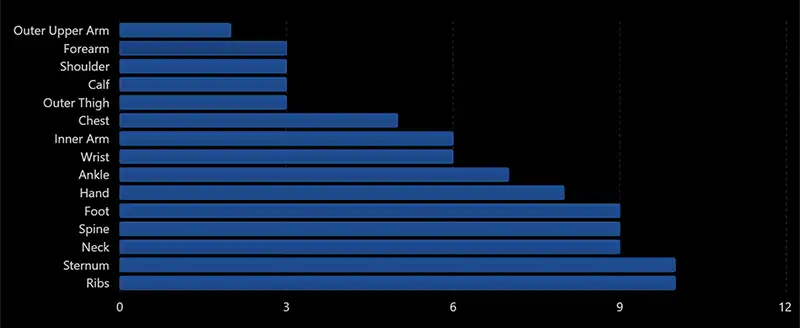
Average Tattoo Pain by Body Area
General pain levels on a scale of 1 (least painful) to 10 (most painful). Individual experiences may vary.
Least Painful Tattoo Placements
These areas are ideal for first-time tattoo clients because they contain more muscle and fat, which helps cushion the tattoo needle.
- Outer Upper Arm
– Pain Level: ★★☆☆☆ (2/10)
– The outer upper arm is widely considered one of the least painful places to get tattooed. It has thick skin, plenty of muscle, and relatively few nerve endings.
– Best for:
→ First tattoos
→ Medium-sized designs
→ Traditional tattoos
→ Floral tattoos
→ Animal tattoos
→ Fine-line artwork - Forearm
– Pain Level: ★★★☆☆ (3/10)
– The outer forearm offers an excellent balance between comfort and visibility. While the inner forearm is slightly more sensitive, both areas remain popular choices for beginners.
– Best for:
→ Script tattoos
→ Realism
→ Geometric designs
→ Black and grey tattoos
→ Memorial tattoos - Shoulder
– Pain Level: ★★★☆☆ (3/10)
– The rounded shoulder provides plenty of muscle to reduce discomfort, making it a comfortable location for many tattoo styles.
– Ideal for:
→ Mandalas
→ Tribal tattoos
→ Animal designs
→ Ornamental tattoos - Outer Thigh
– Pain Level: ★★★☆☆ (3/10)
– The thigh offers one of the largest and most comfortable tattoo canvases on the body. Its thick muscles make it suitable for long tattoo sessions.
– Popular designs include:
→ Portraits
→ Japanese tattoos
→ Floral sleeves
→ Wildlife scenes
→ Large realism pieces - Calf
– Pain Level: ★★★☆☆ (3/10)
– The calf is another beginner-friendly placement with ample muscle and relatively low sensitivity.
– Perfect for:
→ Vertical designs
→ Compass tattoos
→ Traditional artwork
→ Religious imagery
Moderately Painful Tattoo Placements
These locations are manageable for most people but may cause noticeable discomfort during longer sessions.
- Chest
– Pain Level: ★★★★★☆☆☆☆☆ (5/10)
– The chest combines areas of muscle with sections closer to the breastbone and collarbone, creating varying pain levels.
– Pain increases near:
→ Sternum
→ Collarbone
→ Armpits - Inner Arm
Pain Level: ★★★★★★☆☆☆☆ (6/10)
The skin on the inner arm is thinner and contains more nerve endings than the outer arm.
Although more sensitive, it’s still a popular location for meaningful tattoos because of its visibility and elegant appearance. - Wrist
Pain Level: ★★★★★★☆☆☆☆ (6/10)
The wrist has very little cushioning between the skin and bone.
Common tattoo choices include:
Initials
Dates
Quotes
Bracelets
Minimalist symbols - Ankle
– Pain Level: ★★★★★★★☆☆☆ (7/10)
– Ankle tattoos are stylish but can be uncomfortable because the skin sits close to bone.
Most Painful Tattoo Placements
These areas are generally recommended for people who already have tattoo experience or are prepared for a more intense sensation.
- Ribs
– Pain Level: ★★★★★★★★★★ (10/10)
– The ribs consistently rank among the most painful tattoo placements.
– Reasons include:
→ Thin skin
→ Constant movement from breathing
→ Numerous nerve endings
→ Little fat or muscle protection
– Despite the pain, rib tattoos remain popular because they provide an elegant, discreet canvas for meaningful artwork. - Sternum
– Pain Level: ★★★★★★★★★★ (10/10)
– Tattooing directly over the breastbone can be extremely intense due to the lack of soft tissue.
– The vibrations from the tattoo machine often make this placement particularly challenging. - Spine
– Pain Level: ★★★★★★★★★☆ (9/10)
– The spine combines thin skin, prominent bones, and many nerve endings, resulting in significant discomfort.
– However, it offers a striking location for:
→ Vertical quotes
→ Ornamental designs
→ Sacred geometry
→ Floral vines - Feet
– Pain Level: ★★★★★★★★★☆ (9/10)
→ Feet contain many small bones and nerve endings, making tattooing especially sensitive.
→ Additionally, healing can be more difficult because your feet experience constant movement and pressure. - Hands
– Pain Level: ★★★★★★★★☆☆ (8/10)
– Hand tattoos involve thin skin and minimal cushioning.
– They also:
→ Fade faster
→ Require more touch-ups
→ Heal more slowly due to constant use - Neck
– Pain Level: ★★★★★★★★★☆ (9/10)
– Neck tattoos can be quite painful because of the thin skin and numerous nerves in the area.
– While they create a bold visual statement, they are generally recommended for experienced tattoo collectors.
Factors That Can Increase Tattoo Pain
Even if you choose a low-pain area, certain factors can make the experience more uncomfortable.
- Poor Sleep: Lack of rest can increase your sensitivity to pain and reduce your ability to stay relaxed during the session.
- Dehydration: Well-hydrated skin is generally easier to tattoo. Drinking enough water before your appointment can improve both comfort and healing.\
- Low Blood Sugar: Arriving on an empty stomach may make you feel lightheaded and increase discomfort. Eat a balanced meal before your appointment.
- Anxiety and Stress: Feeling nervous is normal, but stress can heighten your perception of pain. Communicate with your tattoo artist, ask questions, and focus on steady breathing to help you relax.
- Long Tattoo Sessions: As your session progresses, your skin becomes increasingly sensitive. Large tattoos often require multiple appointments to allow your body time to recover.
Tattoo Placement Guide for Men
While personal style and artistic preference should always come first, certain tattoo placements are particularly popular among men because they complement masculine body contours, provide excellent space for detailed artwork, and allow flexibility in terms of visibility and future tattoo expansion.
Below is a comprehensive guide to the best tattoo placements for men, including their advantages, ideal tattoo styles, pain levels, visibility, and considerations for healing and longevity.
-
Forearm Tattoos
– The forearm is one of the most popular tattoo placements for men—and for good reason. It offers an excellent balance between visibility, comfort, and artistic flexibility.
– The forearm’s relatively flat surface makes it ideal for highly detailed tattoos, while its moderate pain level makes it suitable for both beginners and experienced tattoo collectors.
– Advantages
→ Moderate pain level
→ Excellent visibility
→ Easy to show or cover with long sleeves
→ Heals relatively well
→ Ages beautifully with proper care
– Considerations: If you spend significant time outdoors, remember that forearm tattoos receive regular sun exposure and should always be protected with sunscreen after healing. - Upper Arm Tattoos
– The upper arm remains one of the most timeless tattoo placements for men. Its muscular shape naturally enhances bold designs and serves as an excellent foundation for future sleeve tattoos.
– Advantages
→ Low pain level
→ Easy to conceal
→ Large tattooing area
→ Great for future expansions
– Upper arm tattoos are particularly appealing for men who want professional flexibility while still having enough space for impressive artwork. - Full Sleeve Tattoos
– For men who view tattoos as a form of storytelling, sleeve tattoos provide one of the most visually striking options.
– A sleeve transforms the entire arm into a continuous canvas, allowing multiple elements to blend seamlessly into a cohesive composition.
– Sleeve Types
→ Quarter sleeve
→ Half sleeve
→ Three-quarter sleeve
→Full sleeve
– Benefits
→ Creates maximum visual impact
→ Unlimited creative possibilities
→ Can be completed gradually
→ Highly customizable
– Considerations: Sleeves often require multiple tattoo sessions over several months and represent a significant investment in both time and cost. - Chest Tattoos
– The chest is one of the most meaningful tattoo placements for men. Many people choose this area for deeply personal artwork because of its proximity to the heart.
– The chest also provides a large, symmetrical canvas for bold compositions.
– Advantages
→ Easy to conceal
→ Excellent detail retention
→ Large design area
→ Ages well
– Pain Level: Moderate to high, particularly near the sternum and collarbones. - Back Tattoos
– The back is the largest tattoo canvas on the human body, making it perfect for highly detailed masterpieces.
– Many experienced tattoo collectors reserve the back for their most ambitious projects.
– Benefits
→ Maximum design freedom
→ Excellent aging
→ Easy to hide
→ Perfect for large-scale realism
– Considerations: Because you cannot easily see your own back tattoo, you’ll rely heavily on your tattoo artist’s expertise and proper aftercare. - Shoulder Tattoos
– The shoulder naturally complements circular and curved tattoo designs.
– Its rounded shape makes it ideal for tattoos that flow into the chest, upper arm, or back.
– Advantages
→ Low pain
→ Easy healing
→ Great expansion potential
→ Professional flexibility
– Many sleeve tattoos begin on the shoulder before extending down the arm. - Bicep Tattoos
– Bicep tattoos are especially popular among men because they accentuate muscle definition and create a powerful visual effect.
– Benefits
→ Lower pain
→ Private yet easily displayed
→ Excellent for medium-sized artwork
– Inner bicep tattoos tend to be more painful than outer bicep tattoos due to thinner skin and increased nerve sensitivity. - Leg Tattoos
– The leg offers tremendous flexibility for tattoo placement, whether you want a single calf piece or a full leg sleeve.
– Areas Include
→ Thigh
→ Calf
→ Shin
→ Knee
→ Ankle
– Advantages
→ Large tattooing surface
→ Easy to conceal
→ Excellent healing
→ Great for long-term projects - Thigh Tattoos
– Thigh tattoos have become increasingly popular among men who appreciate large-scale artwork without constant visibility.
– Advantages
→ Low pain
→ Large canvas
→ Outstanding detail
→ Easy concealment - Calf Tattoos
– The calf provides one of the best surfaces for vertical tattoo compositions.
– Benefits
→ Moderate pain
→ Good visibility
→ Excellent healing
→ Ages well - Neck Tattoos
– Neck tattoos are bold and immediately noticeable, making them a popular choice for men seeking a distinctive, confident look.
– Advantages
→ High visual impact
→ Unique placement
– Considerations
→ Higher pain level
→ Difficult to conceal
→ May influence professional opportunities
→ Requires careful aftercare due to frequent movement
– Neck tattoos are often recommended for individuals who already have several tattoos and are comfortable with highly visible body art. - Hand Tattoos
– Hand tattoos make a powerful statement but require thoughtful consideration due to their visibility and maintenance.
– Advantages
→ Instantly noticeable
→ Great for minimalist or symbolic artwork
– Considerations
→ High pain level
→ Faster fading due to constant exposure
→ More frequent touch-ups
→ Increased sun exposure and friction
– Many artists recommend waiting until you have other tattoos before choosing hand placement. - Rib Tattoos
– Rib tattoos are admired for their sleek appearance and ability to accommodate long, vertical designs.
– Advantages
→ Easily hidden
→ Elegant placement
→ Ideal for meaningful artwork
– Considerations
→ Among the most painful tattoo locations
→ Healing can be challenging due to breathing and torso movement
Choosing the Right Placement Based on Your Lifestyle
Before deciding on tattoo placement, consider how it fits into your daily life and future plans.
If You Work in a Professional Environment
- Placements that are easy to conceal include:
– Upper arm
– Chest
– Back
– Rib cage
– Thigh
These allow you to enjoy your tattoo while maintaining flexibility in formal or workplace settings.
If You Want to Showcase Your Tattoo
- Highly visible placements include:
– Forearm
– Hand
– Neck
– Calf
These locations are ideal for artwork you want to display regularly.
If You’re Planning More Tattoos
- Think long term. Leave room for:
– Full sleeves
– Chest panels
– Back pieces
– Leg sleeves
Planning ahead ensures future tattoos flow naturally and create a balanced, cohesive collection.
Popular Tattoo Placements by Style
Different tattoo styles work best on different parts of the body.
Tattoo Style | Best Placements |
Black and Grey Realism | Forearm, Chest, Back, Thigh |
Traditional | Upper Arm, Calf, Shoulder |
Japanese | Sleeve, Chest, Back, Leg |
Tribal | Shoulder, Arm, Chest |
Fine-Line | Forearm, Wrist, Collarbone |
Geometric | Forearm, Calf, Sternum |
Portraits | Thigh, Chest, Upper Arm |
Script & Lettering | Forearm, Rib Cage, Chest |
Expert Tips for Men Choosing Tattoo Placement
To ensure your tattoo looks great both now and in the future:
- Consider your body shape. Choose placements that complement your physique and muscle definition.
- Think about your career. If you need flexibility, opt for areas that can be easily covered.
- Plan for future tattoos. Leave space if you envision a sleeve, chest panel, or full-back piece.
- Match the placement to the design. Large, detailed artwork needs room to breathe, while minimalist designs often look best on smaller areas.
- Prioritize longevity. Areas with less friction and sun exposure, such as the upper arm, back, and thigh, generally age better.
- Consult our experienced tattoo artist. Our professional can recommend the most flattering placement based on your anatomy, skin type, and artistic vision.
Tattoo Placement Guide for Women
Tattoo placement is just as important as the tattoo design itself. For women, the right placement can enhance the natural flow and contours of the body, complement the size and style of the artwork, and determine how visible or discreet the tattoo will be. Whether you’re considering your first minimalist tattoo, an elegant floral piece, a meaningful quote, or a large-scale realism design, choosing the right location can make a significant difference in the final result.
There is no single “best” tattoo placement for women. The ideal location depends on personal preference, tattoo size, design style, pain tolerance, lifestyle, career considerations, skin movement, and future tattoo plans. What matters most is finding a location where the artwork feels natural and where you will be comfortable wearing it for years to come.
Thigh Tattoos
The thigh is one of the most versatile tattoo placements for women. It provides a relatively large canvas while allowing the tattoo to remain easily concealed under clothing.
Why Women Choose Thigh Tattoos
- Large area for detailed artwork
- Relatively comfortable compared with many bony areas
- Easy to conceal
- Excellent for both small and large designs
- Plenty of room for future additions
Popular Thigh Tattoo Ideas
- Floral arrangements
- Butterflies
- Snakes
- Lions and other wildlife
- Portraits
- Mandalas
- Japanese artwork
- Ornamental designs
- Fine-line compositions
The outer thigh is generally more comfortable than areas closer to the inner thigh, where skin can be more sensitive.
Best For: Women looking for a large, elegant, meaningful, or highly detailed tattoo without having it visible all the time.
Rib Cage Tattoos
Rib tattoos are popular for their elegant, elongated appearance and discreet nature. They can follow the natural curve of the torso, making them particularly effective for designs that need a flowing or vertical composition.
Popular Rib Tattoo Designs
- Quotes and meaningful phrases
- Floral vines
- Feathers
- Birds
- Butterflies
- Snakes
- Fine-line artwork
- Religious verses
- Ornamental designs
Advantages
- Easy to conceal
- Excellent for meaningful tattoos
- Provides a long vertical canvas
- Can complement the body’s natural contours
Things to Consider
The ribs are generally considered a high-pain tattoo placement because of thin skin, limited cushioning, and the proximity of the ribs to the surface. The area also moves continuously as you breathe, which can make long tattoo sessions more challenging.
Sternum Tattoos
Sternum tattoos have become a popular choice for women seeking an elegant and visually striking placement. The center of the chest provides a natural focal point for symmetrical designs.
Popular Designs
- Mandalas
- Sacred geometry
- Ornamental patterns
- Floral designs
- Sun and moon imagery
- Jewelry-inspired tattoos
- Fine-line artwork
Why It Works
A symmetrical tattoo can follow the centerline of the body and create a balanced, decorative appearance.
Pain Level
The sternum can be a high-pain area because the tattoo is placed close to bone and there is relatively little cushioning. For this reason, it may be better suited to clients who are comfortable with more intense tattoo sessions.
Collarbone Tattoos
The collarbone is an elegant placement for women who want their tattoo to be visible without being as prominent as a hand or neck tattoo.
Popular Designs
- Fine-line flowers
- Quotes
- Names
- Dates
- Birds
- Stars
- Minimalist symbols
- Botanical designs
A horizontal design can follow the natural line of the collarbone, creating a graceful visual effect.
- Best For
– Small-to-medium tattoos
– Fine-line designs
– Minimalist tattoos
– Meaningful lettering
– Consideration
The collarbone has relatively little cushioning, so discomfort can be higher than on areas such as the outer thigh or upper arm.
Ankle Tattoos
Ankle tattoos are ideal for women who want a subtle and feminine tattoo that can easily be displayed or concealed.
Popular Designs
- Flowers
- Butterflies
- Stars
- Small symbols
- Initials
- Hearts
- Minimalist designs
- Fine-line artwork
Ankle tattoos work particularly well with small designs that follow the natural shape of the ankle.
Advantages
- Discreet
- Stylish
- Suitable for small tattoos
- Easy to conceal with socks or shoes
Considerations: The ankle has relatively little soft tissue and can therefore be more uncomfortable than placements such as the outer thigh.
Wrist Tattoos
The wrist is one of the most popular locations for small and meaningful tattoos. It is particularly suitable for designs that you want to see regularly.
Popular Wrist Tattoos
- Names
- Initials
- Dates
- Small flowers
- Hearts
- Symbols
- Short quotes
- Minimalist artwork
Why Choose the Wrist?
A wrist tattoo can serve as a personal reminder of something meaningful because it remains within your visual field throughout the day.
Considerations
The wrist is relatively close to bone and contains sensitive areas, so discomfort can be moderate. Tattoos in this location can also experience considerable sun exposure and friction.
Forearm Tattoos
The forearm provides one of the most versatile tattoo canvases for women. It works beautifully for everything from delicate fine-line artwork to larger black-and-grey realism pieces.
Popular Designs
- Botanical tattoos
- Portraits
- Script
- Geometric designs
- Butterflies
- Snakes
- Abstract artwork
- Black-and-grey realism
Advantages
- Excellent visibility
- Easy to show or conceal
- Good surface for detailed artwork
- Generally manageable pain levels
- Suitable for future sleeve projects
The inner and outer forearm can create very different aesthetics, so discuss orientation and placement carefully with your artist.
Upper Arm Tattoos
The upper arm is an excellent choice for women who want a tattoo that can be both visible and discreet. A short-sleeved shirt can showcase the artwork, while longer clothing can easily conceal it.
Best Designs
- Floral compositions
- Portraits
- Realism
- Traditional tattoos
- Mandalas
- Animals
- Ornamental designs
The shoulder and upper arm can also serve as the starting point for a larger sleeve.
Benefits
- Generally lower discomfort
- Plenty of space
- Easy to conceal
- Good long-term placement
- Excellent for future tattoo expansion
Shoulder Tattoos
The shoulder offers a naturally rounded canvas that works particularly well with circular and flowing designs.
Popular Shoulder Tattoo Ideas
- Roses
- Mandalas
- Sunflowers
- Butterflies
- Birds
- Geometric patterns
- Ornamental artwork
A shoulder tattoo can also extend naturally onto the upper arm, collarbone, chest, or back. This makes it a particularly useful placement if you’re considering a larger tattoo project in the future.
Back Tattoos
The back provides one of the largest canvases available for tattoo artwork. Women can choose anything from a small upper-back tattoo to an elaborate full-back composition.
Popular Designs
- Large floral pieces
- Wings
- Butterflies
- Japanese artwork
- Mandalas
- Realism
- Spiritual designs
- Botanical scenes
- Ornamental compositions
Advantages
- Large creative canvas
- Easy to conceal
- Suitable for intricate artwork
- Excellent for large-scale compositions
The upper back and shoulder blade areas can also be particularly attractive for designs that are intended to remain relatively discreet.
Spine Tattoos
Spine tattoos create a dramatic vertical effect because the design follows the natural centerline of the back.
Best Designs
- Quotes
- Floral vines
- Lotus flowers
- Mandalas
- Geometric designs
- Ornamental patterns
- Symbols
- Considerations
The spine can be a more painful placement because of the proximity of the vertebrae and sensitive tissue. Longer designs should be carefully planned so that the proportions and spacing follow the body’s natural structure.
Hip Tattoos
Hip tattoos are a popular choice for women who want something personal and easy to conceal.
Popular Designs
- Floral artwork
- Butterflies
- Quotes
- Vines
- Ornamental patterns
- Fine-line designs
The hip can accommodate both small tattoos and larger pieces that extend toward the thigh or abdomen.
Advantages
- Discreet
- Large enough for detailed designs
- Excellent for personal tattoos
- Can transition into larger thigh pieces
Behind-the-Ear Tattoos
Behind-the-ear tattoos are ideal for women looking for something small and subtle.
Popular Designs
- Tiny flowers
- Stars
- Hearts
- Initials
- Moon designs
- Small symbols
- Minimalist linework
The area provides limited space, so simple designs usually work best.
Considerations: Because the skin is thin and the area is close to bone, it can be more sensitive than expected.
Foot Tattoos
Foot tattoos can create an elegant and distinctive appearance, especially with delicate designs.
Popular Designs
- Flowers
- Vines
- Mandalas
- Small symbols
- Quotes
- Minimalist artwork
However, feet experience considerable friction from footwear and everyday movement. Tattoos in this location can therefore be more difficult to heal and may require touch-ups.
Hand and Finger Tattoos
Hand and finger tattoos are among the most visible tattoo placements. They are particularly popular for small symbolic designs.
Popular Designs
- Rings
- Initials
- Tiny hearts
- Symbols
- Minimalist artwork
- Small lettering
Important Considerations
Hands and fingers experience constant washing, friction, sunlight, and movement. As a result, tattoos in these areas can fade or lose definition more quickly than tattoos in many other locations. They may require periodic touch-ups to maintain their appearance.
Best Tattoo Placements for Our First-Time Female Clients
If you’re getting your first tattoo and are concerned about discomfort, some areas may be more comfortable than others.
Generally Beginner-Friendly Locations
- Outer upper arm: Good cushioning and relatively low discomfort.
- Outer thigh: Large canvas and generally manageable pain.
- Calf: Good for medium-sized designs.
- Outer forearm: Excellent visibility and generally manageable discomfort.
- Shoulder: Versatile and suitable for many styles.
Remember that individual pain tolerance varies significantly, so there is no universal pain ranking that applies equally to everyone.
Best Tattoo Placements for Small Tattoos
Small tattoos often work beautifully in discreet locations.
- Consider:
– Wrist
– Ankle
– Behind the ear
– Collarbone
– Finger
– Upper arm
– Forearm
– Shoulder - Ideal Small Tattoo Styles
– Fine line
– Minimalist
– Micro tattoos
– Small botanical designs
– Symbols
– Initials
– Short lettering
When choosing a small tattoo, avoid putting excessive detail into an extremely tiny design. Your artist can help determine an appropriate size that allows the artwork to remain readable as it ages.
Best Tattoo Placements for Large Tattoos
If you’re planning a larger piece, choose a location with enough space for the artwork to breathe.
- Excellent options include:
– Thigh
– Back
– Upper arm
– Full sleeve
– Chest
– Shoulder
– Leg
Large tattoos generally benefit from adequate spacing because it allows the artist to create better linework, shading, contrast, and detail.
Tattoo Placement by Lifestyle
Your lifestyle should be an important consideration when choosing where to get tattooed.
- If You Want a Discreet Tattoo
– Consider:
→ Thigh
→ Upper back
→ Rib cage
→ Hip
→ Upper arm
→ Chest - If You Want a Visible Tattoo
– Consider:
→ Forearm
→ Wrist
→ Hand
→ Finger
→ Neck
→ Ankle - If You Work in a Corporate or Customer-Facing Environment
– You may want to prioritize areas that clothing can easily cover, such as:
→ Upper arm
→ Back
→ Chest
→ Thigh
→ Hip
It’s worth considering your current career as well as future professional environments.
Tattoo Placement and Body Changes
One important consideration for women is that the body can naturally change over time. Weight fluctuations, pregnancy, aging, muscle development, and changes in skin elasticity can influence how tattoos look.
This doesn’t mean that you should avoid certain tattoo placements. Rather, it means you should discuss your long-term plans with your artist.
Our experienced artist can help you select a placement and design size that work harmoniously with your anatomy.
Get In Touch
For more information on the list above and any other special services,please call or come in for free consultation
Testimonials















































































































































































































































































OUR LOCATION
Areas We Serve
NAIROBI
KIAMBU
KAJIADO
MACHAKOS